
Sustainability Goals
The implementation began with a small number of carefully selected initiatives to ensure a smooth transition and avoid disrupting day-to-day operations or creating an unmanageable workload. The objective was to introduce changes at a pace the business could realistically sustain, allowing time to adapt, learn, and embed new practices into existing processes. For sustainability to be truly effective, the solutions must not only be practical and achievable but also maintainable over the long term, becoming an integral part of the business’s identity and way of operating.
The materiality assessment and risk assessment provided a clear understanding of where the business stands today, the challenges it faces, and the areas where sustainability can be introduced and create value. Together, these exercises allowed us to move from identifying issues to defining a clear direction for the business.
By combining the most material topics with the highest-priority risks, we were able to further narrow our focus and concentrate on the areas where action would have the greatest impact. Rather than trying to address every sustainability issue at once, the objective was to establish a set of priorities that are both meaningful and achievable for the business.
The next step was to translate these priorities into concrete sustainability goals. Each goal was designed to be specific, measurable, and aligned with the company’s strategic objectives, ensuring that sustainability is embedded into everyday business decisions rather than treated as a separate initiative.
A combination of short- and long-term goals was defined to support the business’s sustainability journey. While the short-term objectives focus on delivering practical improvements and establishing strong foundations, the longer-term goals aim to strengthen resilience, improve operational efficiency, and support sustainable growth. The goals were designed to be ambitious yet realistic, taking into account the business’s current resources, capabilities, and level of maturity.
To ensure a structured and achievable implementation, the goals were distributed across a phased timeline. This approach allows the business time to learn, adapt, and progressively build on each achievement before moving to the next stage. Rather than pursuing isolated actions, each goal lays the groundwork for the next, creating a continuous path of improvement and lasting organisational change.
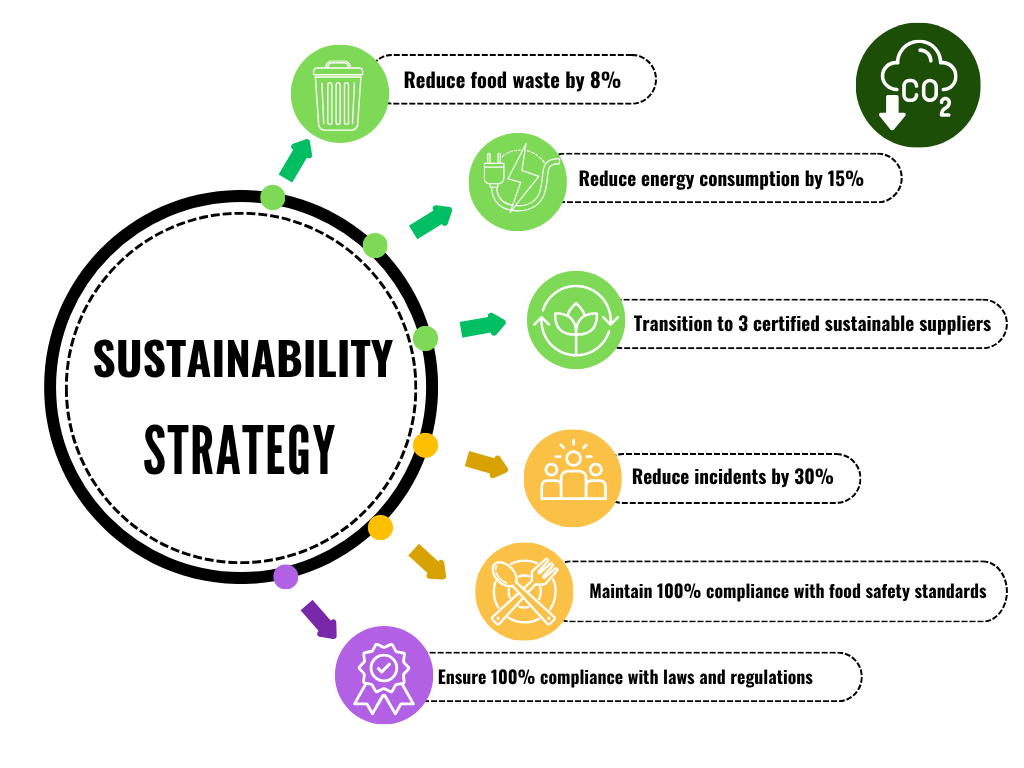
In the following sections, we will take a deeper look at the goals that have been set, exploring how they were developed through a structured process starting with a baseline assessment, followed by data collection, KPI definition, and the identification of concrete actions, and concluding with the verification of results.