
The first stage of our work focused on defining the identity of the business. Before determining where the organisation wants to go, it is essential to understand where it stands today, who it is, and what it represents. This involved an analysis of current operations, management practices, organisational structure, and the business model to identify strengths, areas for improvement, opportunities for innovation, and where sustainability principles could be strategically embedded.
From this assessment, we established the organisation’s Mission, Vision, and Values, creating a clear direction and a common framework for decision-making.
MISSION
To provide a high-quality dining experience through efficient operations, responsible sourcing, and a strong focus on quality, creating value for customers, employees, suppliers, and the business.
VISION
To build a resilient and future-ready restaurant that adapts to changing market conditions, strengthens its relationships across the supply chain, and delivers long-term value through operational excellence and continuous improvement.
VALUES
- Quality
- Efficiency
- Responsibility
- Transparency
- Long-term thinking
Leadership was identified as the key enabler of ESG implementation. Strong leadership ensures that sustainability objectives are integrated into strategy, culture, and decision-making processes, while providing the commitment and accountability needed to drive meaningful change across the organisation.
The key challenge lies in aligning this framework across six restaurant locations. While all sites share a common brand identity and cuisine, each serves a different customer base and possesses unique strengths. The objective is not uniformity but alignment: ensuring each location can adapt to local demand while embracing a shared sustainability mindset around resource efficiency, waste management, and responsible employment practices.
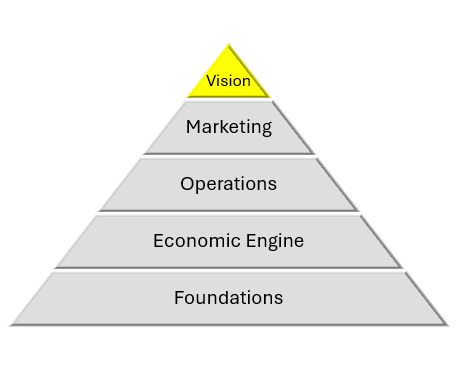
To support implementation, we structured the business model as a pyramid, where each level builds upon the one below it.
At the foundation are the non-negotiables: regulatory compliance, health and safety, governance processes, and all legal obligations necessary for the business to operate effectively. These elements ensure transparency, accountability, and operational continuity. This layer also provides the basis for the Governance and Social dimensions of ESG through responsible management practices, employee welfare, and training.
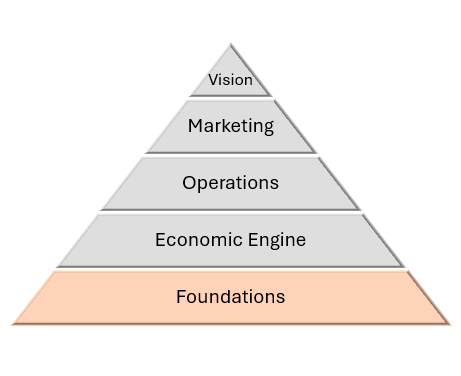
FOUNDATIONS
Regulatory Compliance
- HACCP
- Ensure full compliance of each restaurant with food safety regulations
- Deliver mandatory staff training through e-learning programs
- Provide Personal Protective Equipment (PPE) and display operational checklists in all staff changing rooms
Health & Safety
- Risk Assessment Document (RAD) completed, updated, and signed
- Verify appointments and training validity for Health & Safety Officers, Fire Safety Officers, and First Aid Personnel
- Ensure all employees’ medical examinations are up to date
- Maintain valid compliance certifications for electrical, gas, and grounding systems
Administration & Human Resources
- Maintain signed employment contracts and clearly defined job descriptions for all employees
- Ensure all required municipal authorisations are in place, including business permits, outdoor occupancy permits, and signage approvals
- Maintain a valid music licensing agreement for the public performance of copyrighted music
The second layer focuses on the economic engine of the business. Long-term profitability remains essential to business continuity and growth. By understanding revenue drivers, costs, margins, and performance indicators, the organisation can make informed decisions and allocate resources effectively.
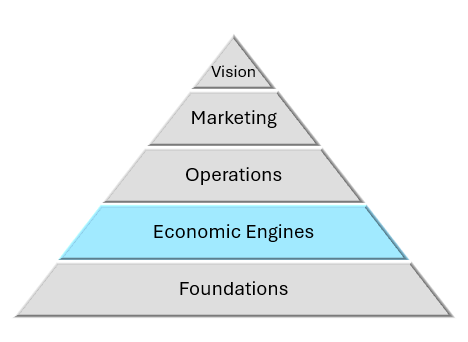
ECONOMIC ENGINE
Budget & Financial Planning
- Define clear performance objectives for each restaurant:
- Revenue targets
- Labor and food costs
- Profit margin: the actual return generated by the business
How to Achieve It
- Revenue analysis
- Sales performance analysis
- Purchasing and procurement analysis
- Menu engineering designed to maximise profitability and sales
Identify the Key Revenue Engine
- Determine which restaurants are the primary contributors to overall revenue and profitability. These sites must remain fully operational at all times and receive priority attention in the event of issues, disruptions, or emergencies. Any interruption to these strategic units has a direct and significant impact on the company’s financial performance
Attention then shifts to operations: the “how” of the business. This is where the greatest opportunities for improvement exist. Sustainability should not be treated as an add-on, but as a strategic lens through which decisions are made. By embedding sustainable practices into daily operations, the business can improve efficiency, reduce waste, strengthen resilience, and create long-term competitive advantages.
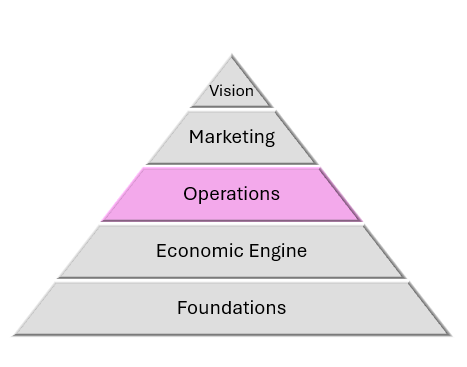
OPERATIONS
Digitalization
- Implementation of digital ordering systems to improve efficiency and accuracy
- Ticketing system for the management and resolution of technical issues
- AI analytics tool to track demand, food cost, inventory
Operational Documentation
- Development of clear and standardised procedures for all critical activities (eg, equipment operation, safety procedures, and workflow execution)
Standardisation & Centralisation
- Standardised operating processes across all locations to ensure consistency, quality, and control
- Centralised production where applicable to improve efficiency, scalability, and cost management
Sustainability
- Food waste reduction
- Waste management
- Water consumption
- Energy efficiency
- Reliable supply chain
Marketing acts as the bridge between operations and growth. Beyond attracting and retaining customers, it provides an opportunity to progressively communicate sustainability commitments, engage stakeholders, and explore partnerships that support the organisation’s objectives.
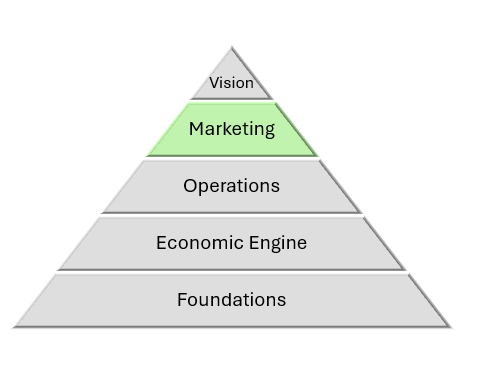
MARKETING
Brand Awareness
- Develop a strong social media presence to increase visibility and attract new customers
- Design and implement targeted promotional campaigns to drive traffic and sales
Customer Retention
- Establish loyalty and customer engagement initiatives that encourage repeated visits and strengthen long-term relationships
Performance Analysis
- Monitor and analyse new customer acquisition
- Track repeat customer rates and retention performance
- Use customer data and insights to optimise marketing activities and business results
- Utilise marketing strategies to communicate sustainability commitments
At the top of the pyramid sits the organisation’s identity and market positioning. This defines how the business wants to be perceived, what differentiates it from competitors, and the space it aims to occupy in the market.
VISION
Market Relevance
- Continuously monitor market trends and evolving customer preferences to remain competitive and relevant
Brand Positioning
- Define how the restaurants should be perceived by customers (e.g., casual, traditional, premium, family-oriented, contemporary)
Customer Experience
- Ensure the physical environment reflects the brand identity through consistent design elements, including décor, furnishings, lighting, colours, and overall atmosphere
Sustainability
- Embed sustainability in the DNA of the business